

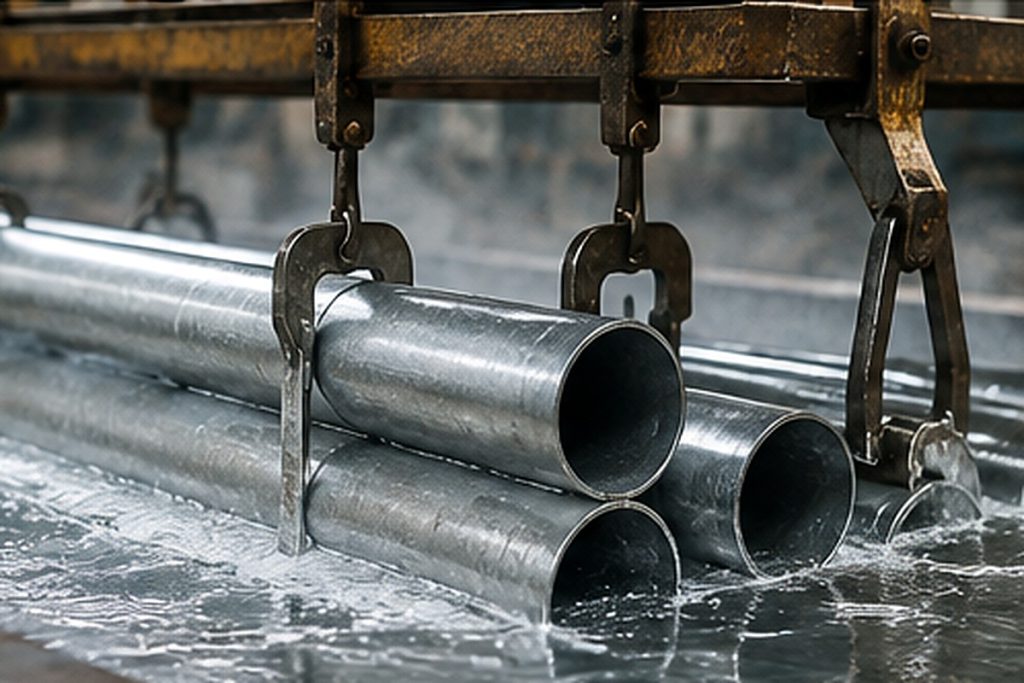
Hot dip galvanising is one of the most commonly used corrosion protection methods in the steel industry. The process involves coating steel surfaces with molten zinc to create a protective barrier against rust and environmental exposure.
In galvanised steel pipe production, surface preparation is a critical step. Pipes are first cleaned to remove oil, scale, and surface contaminants before entering the zinc bath. After immersion, a metallurgical bond forms between the zinc and steel surface.
This coating system provides several advantages:
- improved corrosion resistance,
- extended service life,
- reduced maintenance requirements,
- enhanced durability in outdoor conditions.
Galvanised steel pipes produced through hot dip galvanising are frequently used in mechanical installations, industrial plants, infrastructure systems, and construction projects.
The coating thickness may vary depending on project specifications and production standards. In many applications, galvanised pipes are preferred due to their balance between durability and cost efficiency.
Today, hot dip galvanised piping systems remain one of the most practical solutions for projects requiring long-lasting corrosion protection.